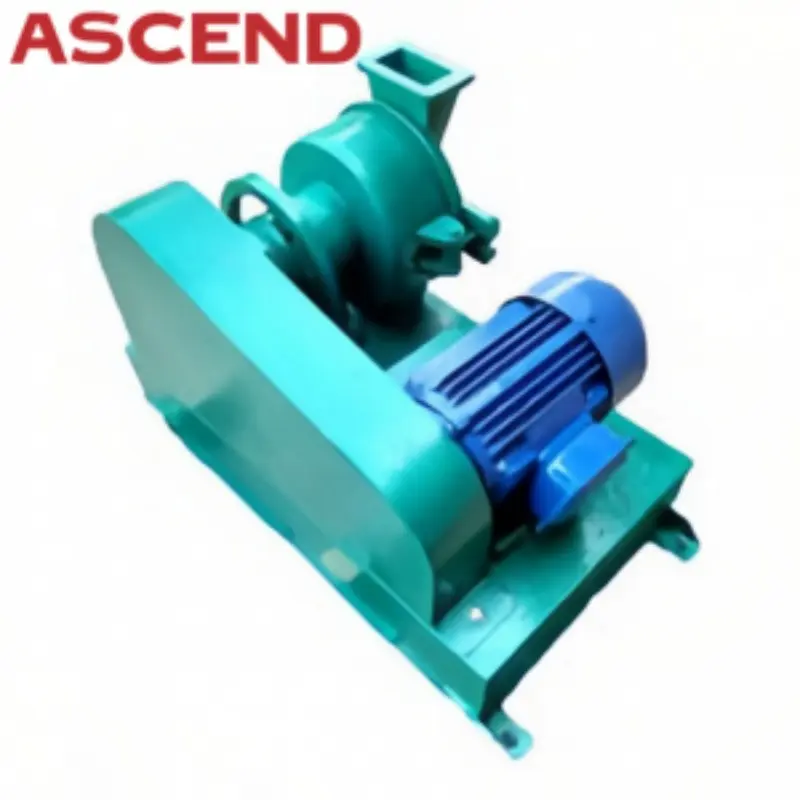
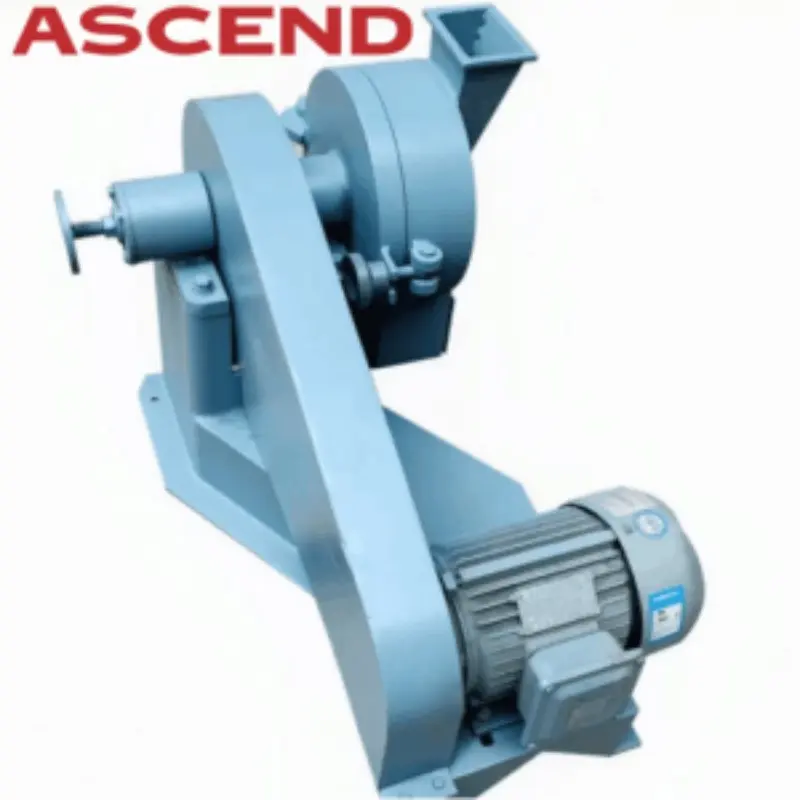
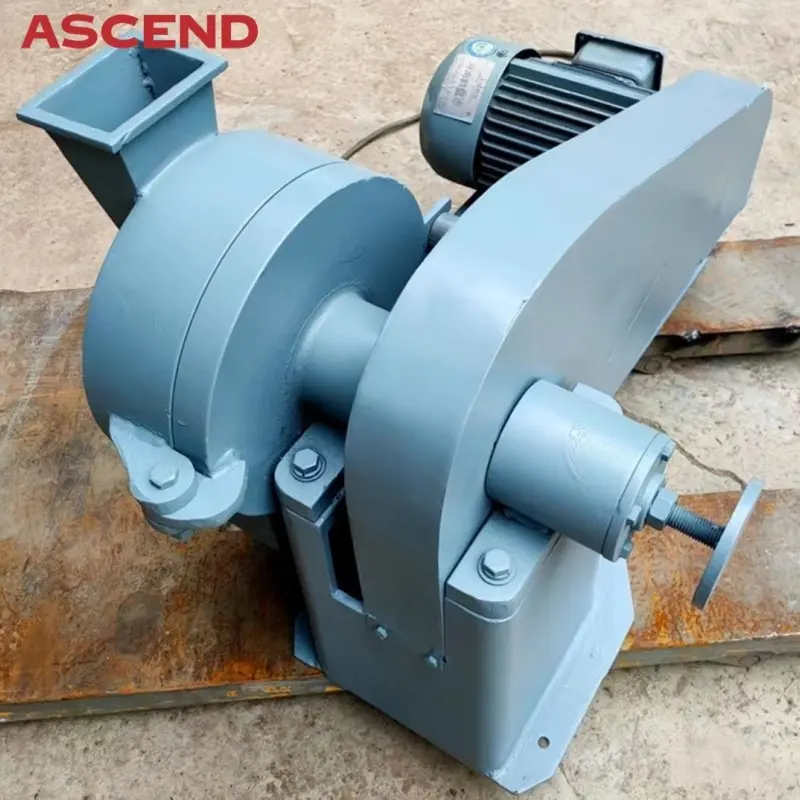
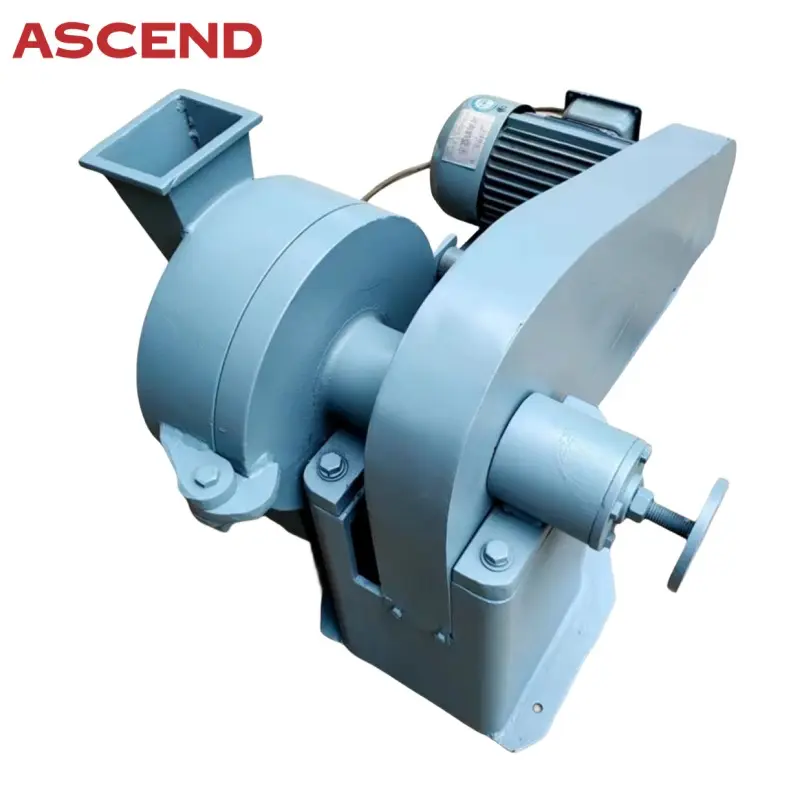
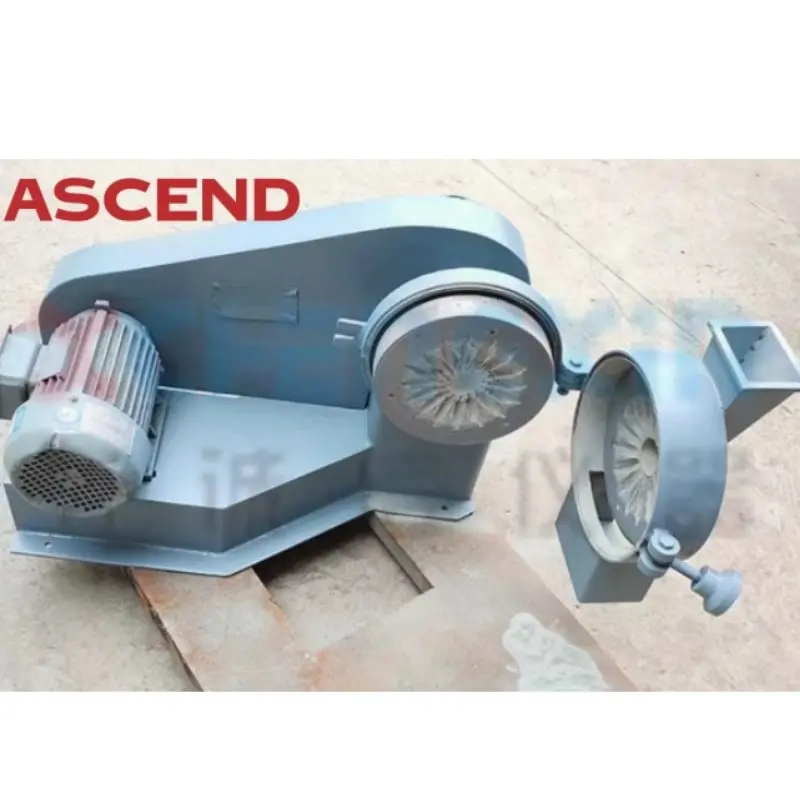
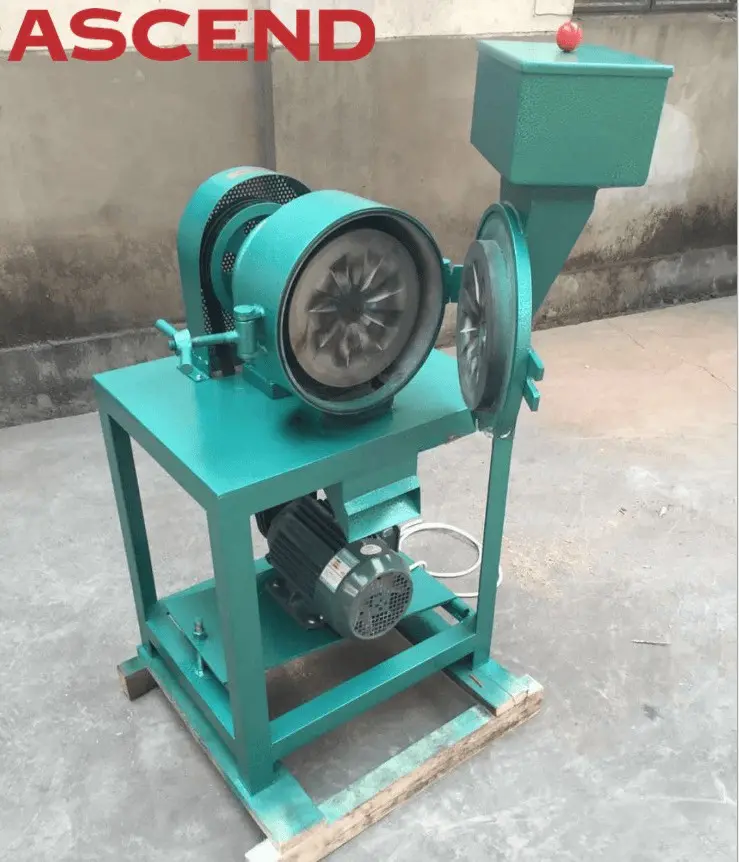
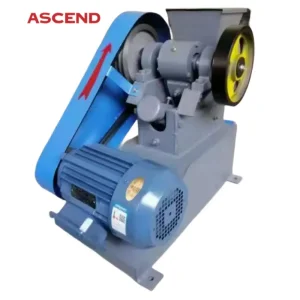
Lab disc mill grinder consists of a machine body, a base, a spindle, a movable grinding disc, a fixed grinding disc, an end cover and a hopper.
After the motor is activated, the power is transmitted to the pulley through the triangle belt, driving the main shaft to rotate. Then it causes the movable grinding disc and the fixed grinding disc to make relative motion to produce a squeezing and grinding effect.
The body, end cover and upper cover form a working room. Materials crushing is carried out in the working room. The materials is added from the feeding port above the end cover and enters the middle of the two grinding plates. Due to the extrusion and grinding effect, the sample is crushed. Crushed sample will discharge from the gap between the two grinding discs and fall into the hopper below.
The output size varies by adjusting grinding disc gap through large and small wheels, spindles, etc.
Q
What are the main components of a lab disc mill grinder?
The grinder consists of a machine body, a base, a spindle, a movable grinding disc, a fixed grinding disc, an end cover, and a hopper.
Q
How does the relative motion between the discs happen?
When the motor is activated, power is transmitted to the pulley via a triangle belt, which drives the main shaft to rotate, initiating the relative motion of the grinding discs.
Q
Where is the material crushed inside the machine?
Material crushing takes place within the designated working room, which is formed by the machine body, the end cover, and the upper cover.
Q
How is the raw sample fed and discharged?
Materials are added through the feeding port on top of the end cover and enter between the two plates. The crushed sample discharges from the gap between the plates and falls into the hopper underneath.
Q
Can you adjust the output particle size?
Yes, the output size can be adjusted by changing the gap between the grinding discs using the large and small wheels, spindles, and related components.
 Ascend