 Ascend
1 / 5
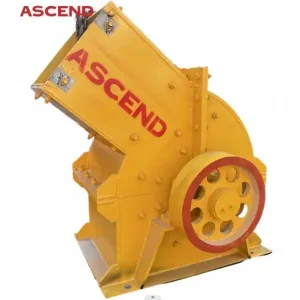
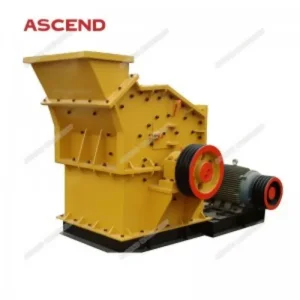
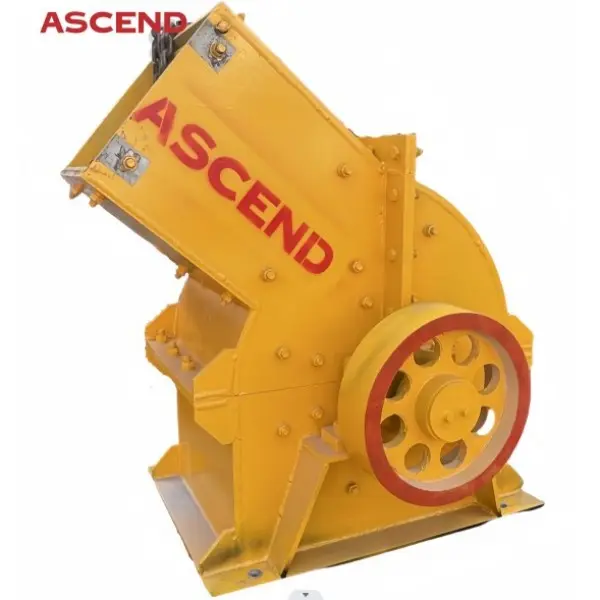
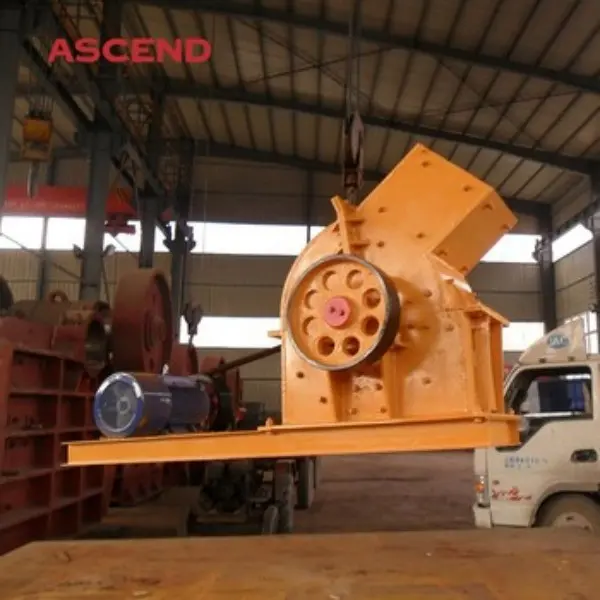
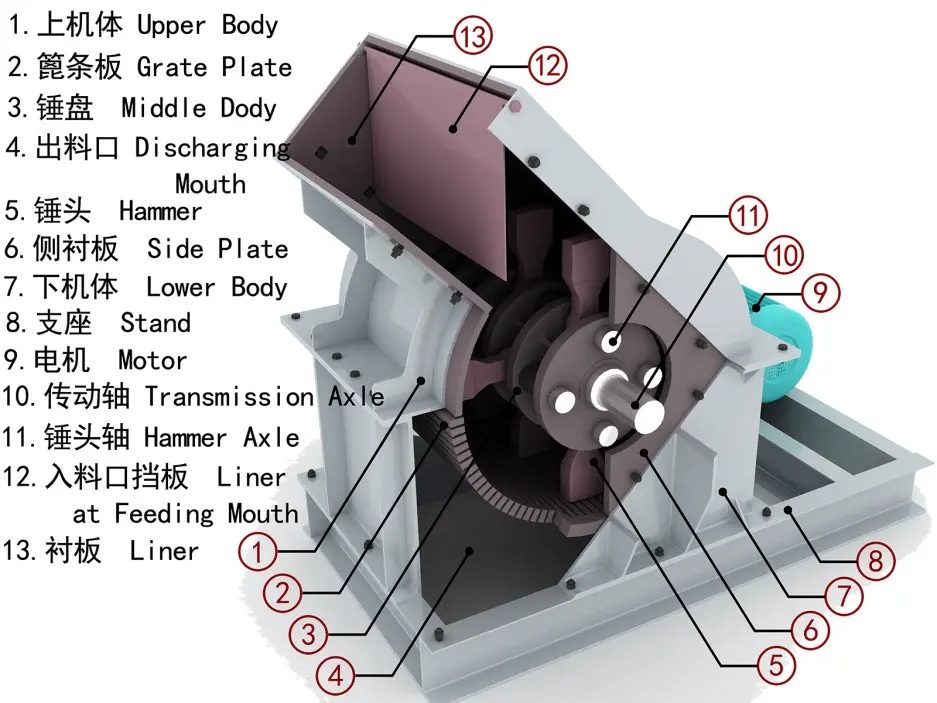
When the crushing machine begin to operate, the motor drives the rotor to spin at high speed, materials are fed into the crushing cavity evenly, and then be impacted, cut and tore by high speed spinning hammerhead till they are completely crushed.
Meanwhile, the gravity action of materials forces them to crash the baffle and grate bars on the frame. Materials with particle size smaller than the screen size will pass the sieve plate while those with bigger particle size are stopped on the plate and will continue to be impacted and grounded by the hammer until they are crushed to the required particle size. Finally, crushed materials will be discharged from the hammer crusher through the sieve plate.
| Name | Max. feeding size (mm) | Output size (mm) | Capacity (t/h) | Motor Power (kw) | Weight (kg) |
|---|---|---|---|---|---|
| PC300×200 | ≤100 | ≤10 | 2-5 | 5.5 | 600 |
| PC400×300 | ≤100 | ≤10 | 5-10 | 11 | 800 |
| PC600×400 | ≤120 | ≤15 | 10-25 | 18.5 | 1500 |
| PC800×600 | ≤120 | ≤15 | 20-35 | 55 | 3100 |
| PC1000×800 | ≤200 | ≤13 | 20-40 | 115 | 7900 |
| PC1000×1000 | ≤200 | ≤15 | 30-80 | 132 | 8650 |
| PC1300×1200 | ≤250 | ≤19 | 80-200 | 240 | 13600 |
Hammer crusher is suitable for crushing various kinds of brittle mineral materials, such as coal, salt, gypsum, alum, brick, tile, limestone, slag, coke and so on etc.
It utilizes a high-speed spinning rotor driven by a motor. Once materials enter the crushing cavity, they are impacted, cut, and torn by the high-speed hammerhead until they are fully crushed.
The hammer crusher is designed for brittle mineral materials, including limestone, coal, salt, gypsum, alum, brick, tile, slag, and coke.
Materials smaller than the screen size pass through the sieve plate directly. Larger particles remain on the plate and continue to be grounded by the hammer until they reach the required discharge size.
It features a simple structure with fewer wear-parts, making maintenance easy. Additionally, its hammer head utilizes wear-resistant and impact-resistant technology to ensure a longer lifespan.
Yes, it can reduce materials directly to the target size without requiring a secondary crusher, helping to lower initial investment costs.
Depending on the model, capacity ranges from 2-5 t/h up to 80-200 t/h, powered by motors ranging from 5.5 kw up to 240 kw.