 Ascend
1 / 5
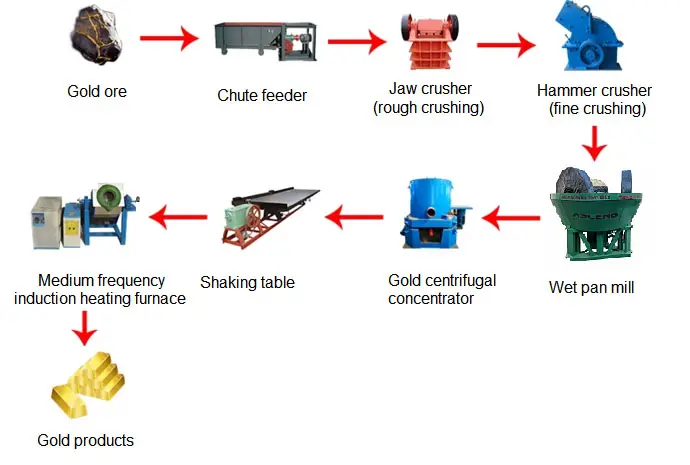
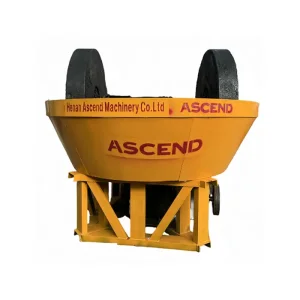
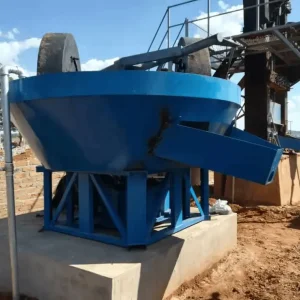
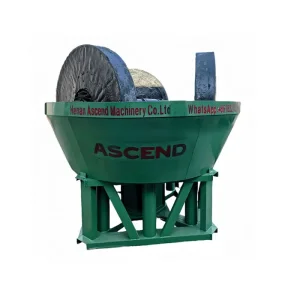
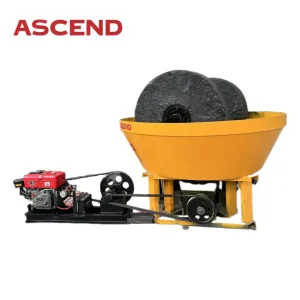
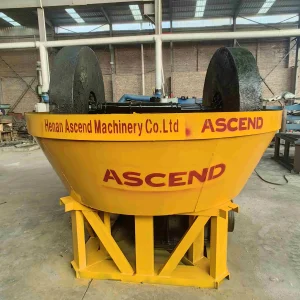
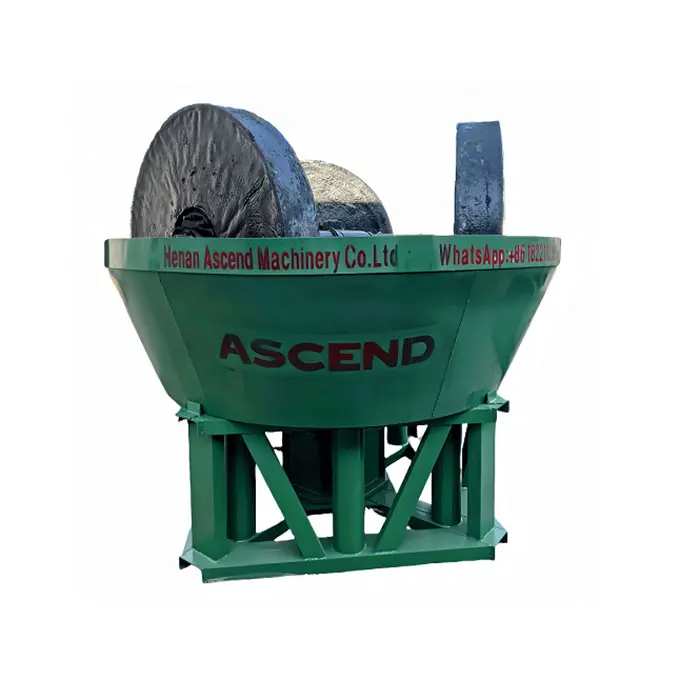
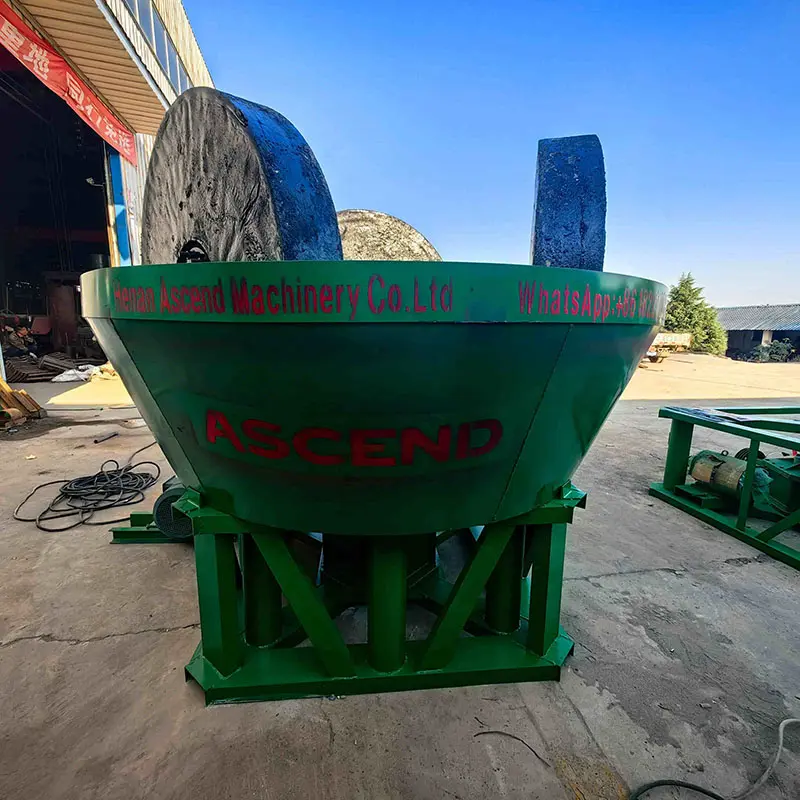
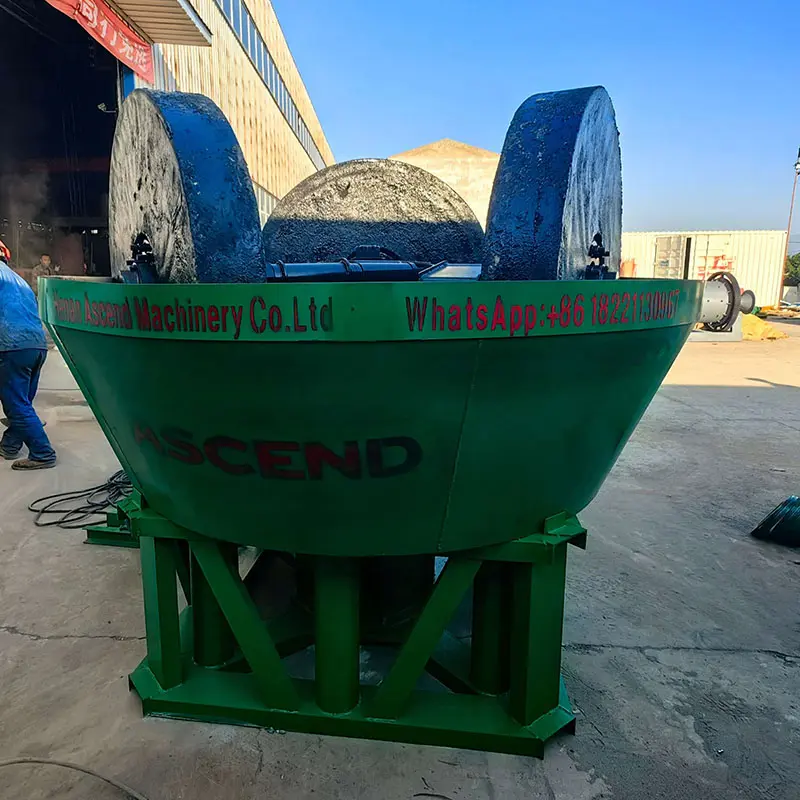
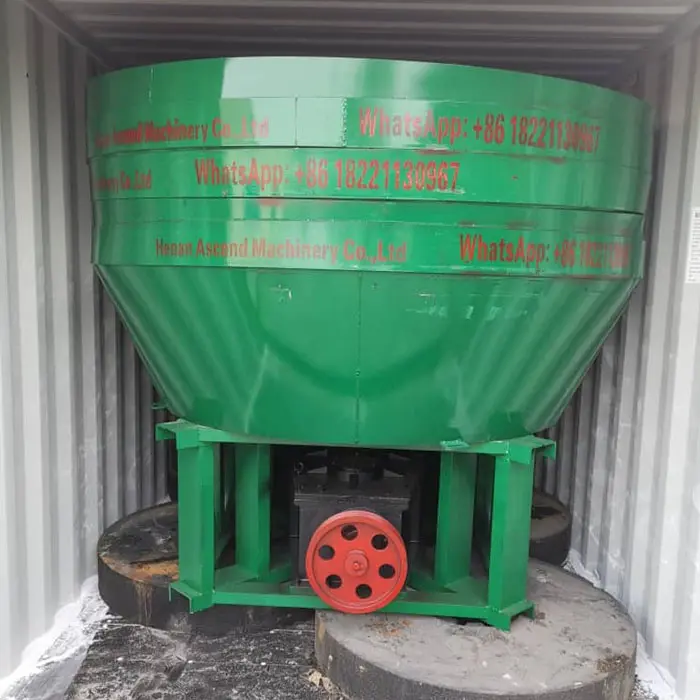
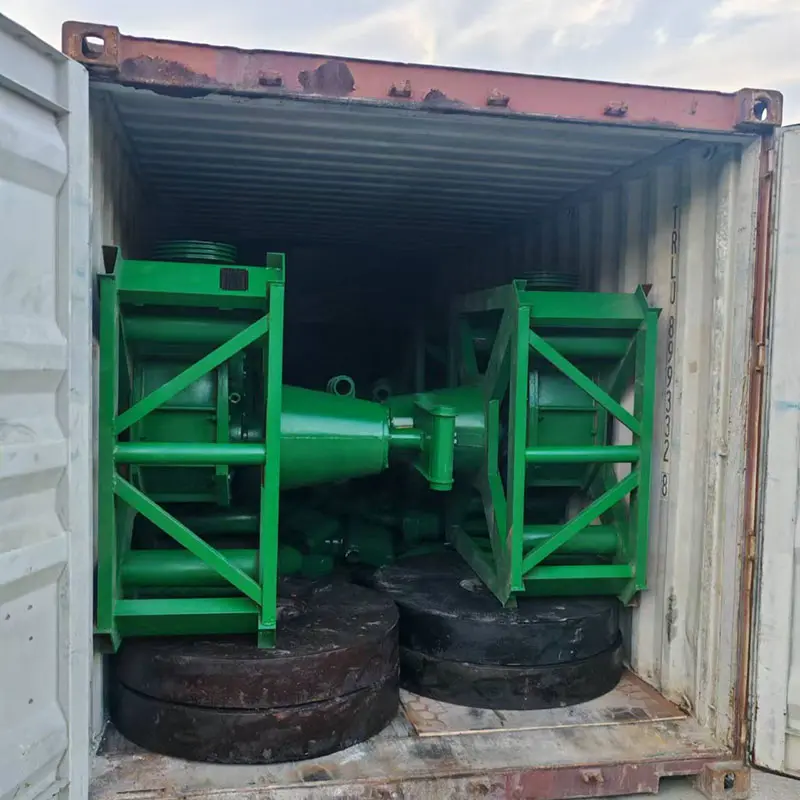
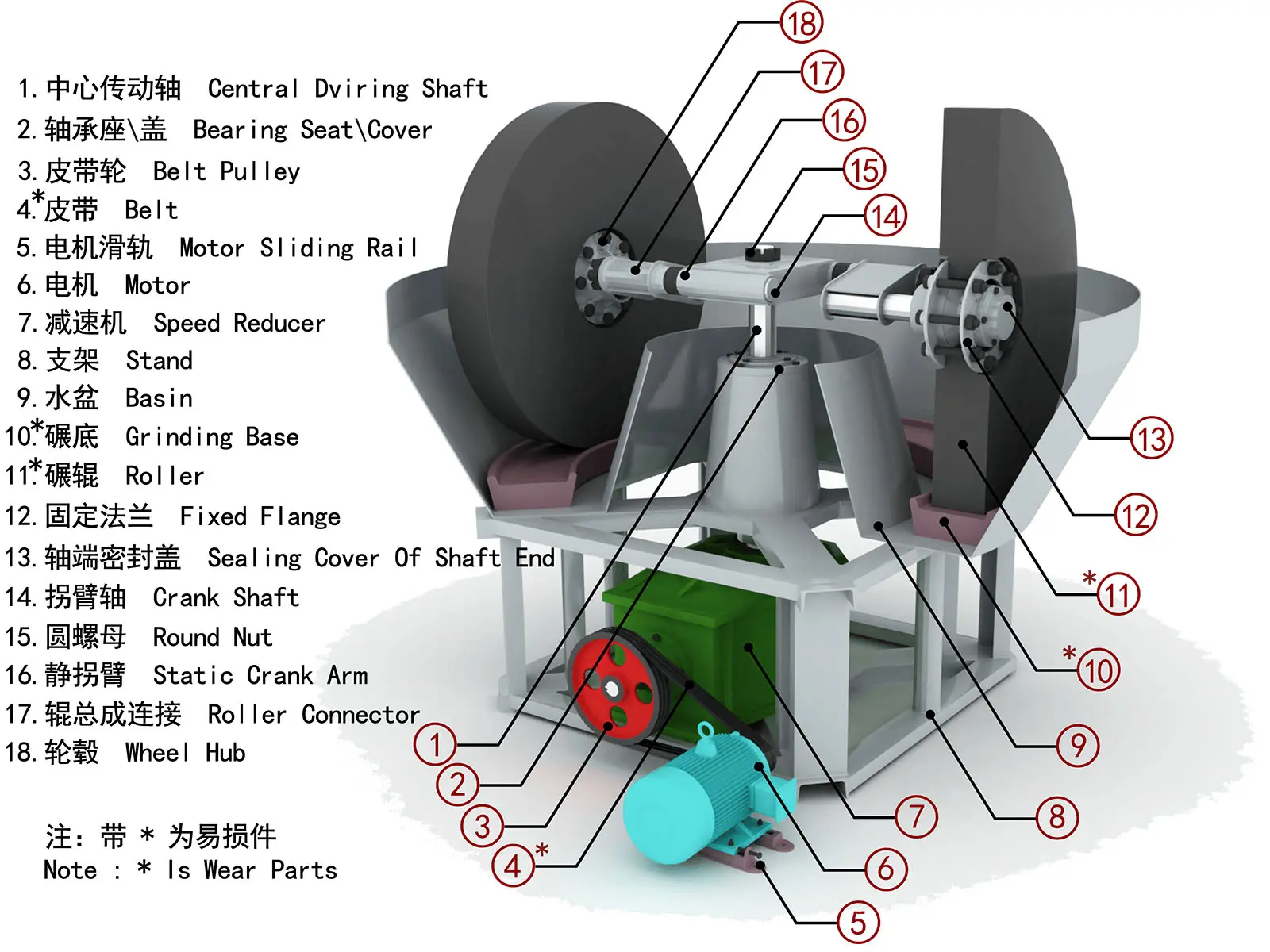
The motor drives the speed reducer through the V-belt, and then the speed reducer drives the rollers, so that the rollers rotate in the clockwise direction. We add raw materials and liquid in a certain proportion into the basin. The materials and liquid in the basin are evenly mixed as the rollers rotate. At the same time, the materials are repeatedly stirred, crushed and ground with the friction between the roller and the grinding base. After being ground to a certain fineness, they are discharged with water to achieve the purpose of mineral processing.
| Model | Type (mm) | Input Size (mm) | Capacity (t/h) | Power (kW) | Weight (t) |
|---|---|---|---|---|---|
| 1600 | 1600 × 350 × 200 × 460 ± 20 | < 25mm | 1.5 - 3 | 30 | 13.5 |
| 1500 | 1500 × 300 × 150 × 420 ± 20 | 1 - 2 | 22 | 11.3 | |
| 1400 | 1400 × 260 × 150 × 350 ± 20 | 0.8 - 1.2 | 18.5 | 8.5 | |
| 1200 | 1200 × 180 × 120 × 250 ± 20 | 0.4 - 0.6 | 7.5 | 5.5 | |
| 1100 | 1100 × 160 × 120 × 250 ± 20 | 0.3 - 0.4 | 5.5 | 4.5 |
A1: It is widely used for grinding various ores, especially gold, silver, lead, zinc, and iron, to achieve optimal mineral separation. It is highly efficient for small and medium-scale mineral processing plants.
A2: The motor drives the rollers to rotate clockwise inside the basin. Raw materials and liquid are mixed together, then continuously stirred, crushed, and ground through heavy friction between the rollers and the grinding base.
A3: The input size of the raw materials should generally be less than 25mm to ensure efficient grinding and to prevent premature wear on the rollers and grinding base.
A4: The capacity ranges from 0.3 - 0.4 tons per hour for the smaller 1100 model, up to 1.5 - 3.0 tons per hour for the larger 1600 model, depending on the mineral characteristics.
A5: Once the materials are ground to the desired fineness, they are mixed with water and discharged overflow-style through the outlet to proceed to the next mineral processing stage.
A6: Power requirements vary by model size. The smaller 1100 model requires 5.5 kW of power, while the largest 1600 model requires 30 kW of power for heavy-duty operation.