Choosing among the Top 10 100 T/H Gold Washing Plant Suppliers requires more than comparing catalogue prices. A plant rated at 100 tonnes per hour may perform differently under real feed conditions. Clay content, gravel size, gold particle distribution, and water quality can change the result.
This introduction examines suppliers through practical and technical evidence. It considers trommel design, scrubber performance, screen efficiency, recovery equipment, power demand, water recycling, and after-sales support. Site references are especially valuable. A supplier’s photograph is not proof. Ask for test results, process flow sheets, component specifications, and installation records from comparable projects.
Dr. Barry A. Wills, a respected mineral-processing authority, stated, “The aim of mineral processing is to liberate and concentrate the valuable minerals from the ore.” That principle remains important when evaluating a 100 T/H Gold Washing Plant. High capacity alone does not guarantee effective recovery. A muddy feed can overload a screen. Poor water control can increase operating costs. Small design details matter.
This guide also reviews supplier experience, engineering transparency, delivery capability, maintenance support, and responsible water management. It avoids treating every manufacturer as equally suitable. Some companies may offer strong equipment but limited local service. Others may provide excellent commissioning support but higher initial costs. That difference deserves attention.
There is no perfect supplier.
The final selection should match the deposit, climate, workforce, site access, and environmental requirements. Buyers should verify claims independently and request a realistic performance assessment before signing a purchase agreement.
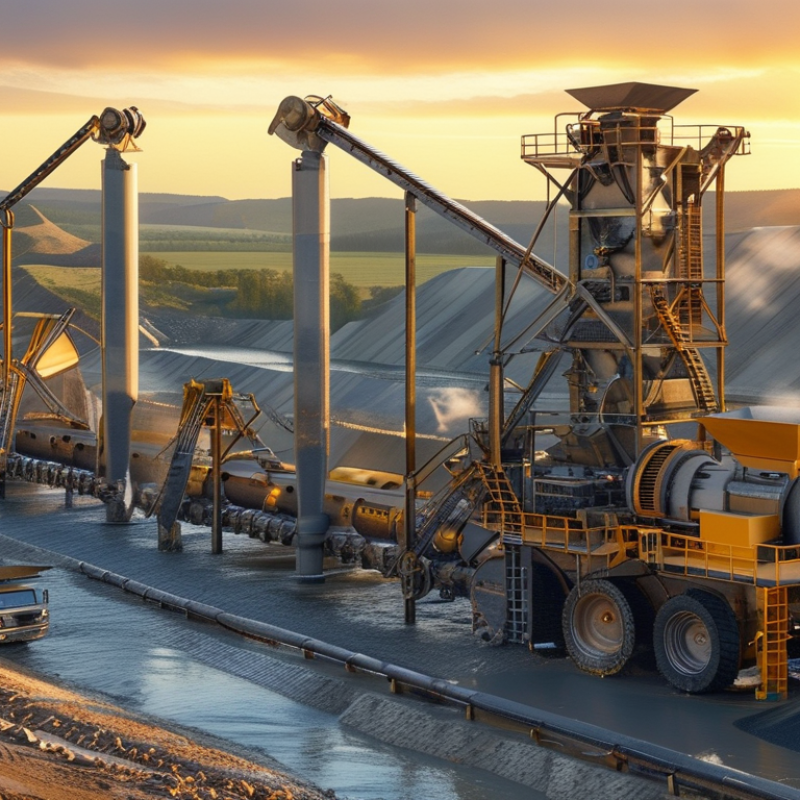
A 100 T/H gold washing plant is a mineral-processing system designed to handle about 100 tonnes of raw feed per hour. It does not produce 100 tonnes of gold concentrate. The rating describes the material entering the plant, including gravel, clay, water, and gold-bearing particles. Actual throughput changes with moisture, rock size, and clay content. That difference matters when evaluating suppliers or comparing equipment proposals.
The process usually begins with a feed hopper and a grizzly that removes oversized stones. A trommel or scrubber then uses water and rotating action to loosen clay from the gravel. Screens separate finer material, while gravity-based recovery equipment concentrates heavier particles. Gold recovery depends on proper liberation, not only machine size. Sticky clay can coat gold particles and reduce recovery. Clean washing water is essential.
A nominal 100 T/H rating can look impressive on paper. Real conditions may tell a different story. A plant handling dry, loose gravel may approach its rated capacity, while wet clay can slow feeding sharply. Site testing should check feed size, clay percentage, water demand, recovery rate, and tailings discharge. Wear parts also deserve attention, especially in abrasive ground. One common mistake is choosing maximum capacity too early. Running slightly below 100 T/H may provide steadier recovery and fewer blockages. The first calculation is rarely perfect. Review it against actual field samples.
A 100 t/h claim is only a starting point. Ask whether the figure means dry feed, wet feed, or screened material. Request a flow sheet, test results, and a written definition of recovery. The World Gold Council reported global gold demand of 4,974.5 tonnes in 2024, including over-the-counter demand. This market pressure makes reliable processing more valuable, but it does not excuse weak supplier evidence. A credible supplier should explain feed size, clay content, water use, power demand, and expected recovery under your ore conditions.
Visit an operating installation if possible. Watch the scrubber, screens, pumps, and concentrate-handling points during a full shift. Check whether the promised 100 t/h remains stable when the feed becomes sticky.
The U.S. Geological Survey estimated 2024 global mine production at about 3,300 tonnes, showing the scale of modern supply, yet plant performance still depends heavily on local geology.
Compare at least ten suppliers using the same test sample and measurement method. Warranty response time matters too. A low purchase price can become expensive after repeated screen failures.
Tips: Ask for three recent references, independent recovery data, and maintenance records. Verify spare-part lead times before signing. Do not trust polished videos alone. I have seen impressive demonstrations hide difficult shutdown access. That risk deserves a site inspection. Also review water recycling, operator safety, and basic environmental controls. These details may seem small, but they often decide whether a plant performs consistently.
Top 10 Suppliers of 100 T/H Gold Washing Plants
A reliable top-ten supplier list should focus on verified plant performance, not advertising claims. Suitable suppliers include integrated plant manufacturers, modular plant builders, trommel specialists, scrubber engineers, alluvial processing designers, EPC contractors, regional fabricators, automation providers, water-management specialists, and commissioning teams. Each should demonstrate experience handling approximately 100 tonnes per hour under comparable feed conditions.
Ask for measured capacity, recovery test results, equipment drawings, and references from operating sites. A practical plant may include a hopper, grizzly, scrubber or trommel, vibrating screen, sluice system, pumps, conveyors, and control panels. Feed size and clay content matter greatly. A supplier that ignores these details may offer an attractive but unsuitable design.
Look closely at steel thickness, bearing protection, screen access, and spare-part availability. Wet areas need strong drainage and sensible water recycling. Commissioning support is valuable, especially when feed moisture changes during the season. A brochure is not proof. Request inspection records and performance data. One weakness remains: suppliers may test with cleaner material than the actual site feed. Independent sampling can reduce that risk. Compliance with local permits, environmental controls, worker safety rules, and responsible water use should remain part of the purchasing decision.
Top 10 100 T/H Gold Washing Plant Suppliers: Key Equipment and Technologies to Compare
A 100 t/h plant should mean 100 tonnes of feed per hour, not gold production. Compare suppliers using measured feed size, clay content, moisture, and recovery data. A practical flowsheet may include a hopper, grizzly, trommel scrubber, vibrating screen, centrifugal concentrator, sluice, pumps, and water-recycling equipment. Each machine must match the ore, or the advertised capacity becomes meaningless.
The World Gold Council’s Gold Demand Trends, Full Year 2024, reported global gold supply of about 4,974 tonnes, including roughly 3,661 tonnes from mines. This scale makes recovery efficiency commercially important, even for smaller plants. Ask suppliers for recovery curves, mass-balance results, screen aperture details, and power consumption under comparable conditions. A laboratory test using your own ore is more reliable than a polished brochure.
Water management deserves equal attention. Compare settling tanks, hydrocyclones, thickening performance, and recirculation rates. The International Mining industry increasingly measures water intensity, but supplier data can remain incomplete. I would not accept “low water use” without hourly flow figures. Check wear parts, bearing access, emergency shutdowns, and local maintenance skills. One overlooked detail is feed variability. A plant handling soft clay today may struggle with sticky material tomorrow. Request a trial layout, realistic installation schedule, spare-parts list, and independently witnessed commissioning results before ranking suppliers.
| Rank | Anonymous Supplier Profile | Typical 100 t/h Plant Configuration | Recommended Feed Size | Primary Washing Equipment | Screening and Classification | Gold Recovery Technology | Indicative Water Demand | Indicative Installed Power | Mobility and Setup | Best-Fit Deposit | Key Comparison Point |
|---|---|---|---|---|---|---|---|---|---|---|---|
| 1 | Profile A Strong alluvial package |
100 t/h trommel plant with integrated hopper, spray bars, scrubber section, vibrating screen and concentrate recovery module. | 0–200 mm | Heavy-duty rotary trommel with internal lifters and high-pressure washing sprays. | 12–25 mm oversize separation; adjustable sluice feed for the undersize fraction. | Riffled sluice, gravity concentrator and final clean-up table. | 80–150 m³/h | 90–130 kW | Skid-mounted; suitable for semi-mobile installation. | Alluvial gravel with moderate clay content. | Compare clay-breakup efficiency, trommel wear protection and recovery of fine gold. |
| 2 | Profile B High-clay feed specialist |
100 t/h rotary scrubber plant followed by a vibrating screen, dewatering section and gravity recovery circuit. | 0–250 mm | Rotary scrubber with rubber liners, internal lifters and intensive attrition washing. | 10–20 mm aperture range; separate dewatering screen for coarse tailings. | Jig or centrifugal concentrator combined with a sluice recovery stage. | 100–180 m³/h | 120–180 kW | Modular plant; requires a prepared foundation and recirculation pond. | Sticky or cemented alluvial ore. | Check scrubber retention time, liner life and the amount of recycled process water. |
| 3 | Profile C Compact mobile design |
Mobile trommel with feed hopper, diesel-electric drive, integrated sluice and compact concentrate collection area. | 0–150 mm | Compact trommel with spray manifold and replaceable screening panels. | 12–20 mm screening; oversize discharge by short radial conveyor. | Extended rubber-mat sluice with removable riffle trays. | 60–110 m³/h | 75–110 kW | Trailer- or skid-mounted; fast relocation between shallow pits. | Loose alluvial material with low to moderate clay. | Compare transport dimensions, setup time, fuel consumption and access requirements. |
| 4 | Profile D Fine-gold recovery focus |
100 t/h washing and sizing plant with trommel, hydrocyclone classification and enhanced gravity concentration. | 0–100 mm | Low-speed trommel with controlled feed and variable spray pressure. | 10–16 mm primary cut; hydrocyclone classification for finer fractions. | Enhanced gravity concentrator followed by a shaking table for clean-up. | 90–160 m³/h | 110–160 kW | Stationary or containerized modular arrangement. | Fine-grained alluvial gold and classified sand. | Compare recovery data by particle size, especially below 0.15 mm. |
| 5 | Profile E Low-water circuit |
100 t/h trommel plant with spray-water recycling, settling pond, return-water pump and gravity recovery circuit. | 0–180 mm | Screening trommel with moderate-pressure wash bars. | 15–25 mm separation; coarse fraction discharged to a stockpile conveyor. | Water-saving sluice with centrifugal concentrator for periodic clean-up. | 45–90 m³/h fresh makeup water | 85–125 kW | Fixed or semi-mobile; needs settling and water-storage capacity. | Alluvial deposits in water-constrained locations. | Compare solids settling performance, pump head and required pond volume. |
| 6 | Profile F Large-particle handling |
100 t/h feed system with grizzly hopper, robust rotary scrubber, trommel screen and separate oversize conveyor. | 0–300 mm | Heavy-duty scrubber with replaceable wear plates and oversize protection. | 20–30 mm primary cut; optional secondary sizing screen. | Jig, sluice and concentrate table arranged in series. | 110–200 m³/h | 140–210 kW | Modular stationary plant; crane or loader required for major installation work. | Coarse, rocky alluvial gravel with large cobbles. | Compare feed-opening size, grizzly capacity, liner replacement time and structural strength. |
| 7 | Profile G Automation-oriented package |
100 t/h plant with variable-speed feeders, trommel, PLC control panel, level sensors and automated pump controls. | 0–160 mm | Variable-speed trommel with monitored wash-water pressure. | 12–20 mm separation; optional density or flow monitoring on the recovery feed. | Gravity concentrator with automated feed-density control and manual final clean-up. | 80–140 m³/h | 100–150 kW | Containerized controls with skid-mounted process modules. | Operations requiring stable feed rate and reduced manual adjustment. | Compare sensor package, control logic, spare-parts availability and operator training. |
| 8 | Profile H Rugged remote-site layout |
Diesel-powered 100 t/h wash plant with heavy-duty hopper, trommel, independent water system and compact recovery line. | 0–200 mm | Reinforced trommel with sealed bearings and dust-resistant drive components. | 15–25 mm screening; oversize conveyed or discharged by gravity. | High-capacity sluice with a portable concentrate clean-up unit. | 70–130 m³/h | 100–160 kW equivalent | Trailer-mounted or skid-mounted; designed for limited infrastructure. | Remote alluvial sites with unreliable grid power. | Compare diesel fuel use, service intervals, component interchangeability and field repairability. |
| 9 | Profile I Modular expansion option |
Base 100 t/h wash plant designed for later addition of secondary classification, extra gravity recovery and tailings management. | 0–180 mm | Standard trommel with bolted screen sections for future aperture changes. | 12–25 mm primary cut; space reserved for a secondary screen or cyclone cluster. | Sluice and jig in the base circuit; optional enhanced gravity stage. | 80–150 m³/h | 90–145 kW initially | Bolted modular frames; suitable for phased construction. | Deposits where test results may justify future capacity or recovery upgrades. | Compare expansion interfaces, available pump capacity and structural allowances. |
| 10 | Profile J Cost-conscious standard plant |
Conventional 100 t/h trommel wash plant with hopper, spray bars, integrated sluice and basic tailings discharge. | 0–150 mm | Standard rotary trommel with replaceable screen mesh or panels. | 15–25 mm separation; simple gravity discharge for oversize. | Riffled sluice with matting and manual concentrate clean-up. | 70–130 m³/h | 80–120 kW | Skid-mounted; relatively simple installation and operation. | Free-washing alluvial gravel with limited clay. | Compare total installed cost, screen replacement cost, recovery test results and after-sales support. |
Top 10 100 T/H Gold Washing Plant Suppliers
How to Select the Right Supplier for Your Project
Choosing among the top ten 100 T/H gold washing plant suppliers requires more than comparing prices. Examine actual recovery data, feed size, clay content, water availability, and site conditions. A reliable supplier should provide process diagrams, equipment specifications, installation guidance, and verifiable project references. Ask for test results using ore similar to yours. Laboratory data from different material can be misleading.
Look closely.
Tips: Request a complete quotation, not only the washing machine price. Confirm screen dimensions, pump capacity, spare parts, warranty terms, delivery scope, and operator training. Ask who handles commissioning and how quickly technical support responds. A supplier that avoids clear answers may create expensive delays. Also check whether the plant can be adjusted when feed conditions change. Real deposits rarely remain consistent.
During supplier evaluation, inspect drawings for practical details, such as access platforms, drainage points, hose connections, and maintenance clearance. Speak with previous users when possible, and ask about downtime rather than only production capacity. A claimed 100 T/H rate may depend on ideal feed and continuous water supply. In field reviews, small omissions often matter: weak bearings, undersized pumps, or difficult screen access can reduce performance. I would also keep a contingency budget, because initial estimates are not always complete. A transparent supplier will admit these limits and explain the assumptions behind its proposal.
Recommended evaluation weighting for comparing suppliers of a 100-ton-per-hour gold washing plant. The criteria reflect common technical, operational, and commercial requirements rather than company-specific performance data.
Use these weightings as a practical starting point, then adjust them according to ore type, gold particle size, water availability, site conditions, and local service requirements.
It processes about 100 tonnes of raw feed per hour. That feed includes gravel, clay, water, and gold-bearing particles. It does not produce 100 tonnes of gold concentrate. Paper capacity deceives.
Moisture, rock size, and sticky clay can reduce feeding speed. Wet clay may block screens and slow the scrubber. Loose gravel usually moves more easily. Field conditions decide.
A typical layout includes a hopper, grizzly, scrubber, screens, pumps, and gravity recovery equipment. Water-recycling tanks may reduce fresh-water demand. Each machine must match the ore. Bigger is not always better.
Ask whether the rating uses dry feed, wet feed, or screened material. Request a flow sheet, test results, and written recovery definitions. Use the same sample for every supplier comparison. Definitions matter.
Test feed size, clay percentage, moisture, water demand, recovery, and tailings discharge. Use representative field samples, not convenient material. A laboratory result can still miss sudden feed changes. My first estimate may be wrong.
Recovery depends on gold liberation, not machine size alone. Sticky clay can coat particles and reduce gravity recovery. Request mass-balance results and recovery data from comparable material. Test your own ore.
Watch the scrubber, screens, pumps, and concentrate-handling points during a full shift. Check performance when feed becomes wet and sticky. Inspect shutdown access and visible wear. Videos can hide problems.
Review screen life, bearing access, pump condition, spare-part availability, and service response times. A low purchase price may become costly after repeated failures. Ask for three recent operating references. Keep records.
Compare settling tanks, hydrocyclones, thickening performance, and water-recycling rates. Ask for hourly water-flow figures instead of vague efficiency claims. Review safe walkways, emergency shutdowns, and controlled tailings discharge. Small details matter.
A 100 T/H Gold Washing Plant is a processing system designed to handle approximately 100 tons of gold-bearing material per hour. This article explains how such a plant works, including feeding, screening, washing, gravity separation, water circulation, and concentrate recovery. It also outlines the main factors for evaluating suppliers, such as engineering experience, processing performance, equipment durability, customization capability, installation support, maintenance service, delivery schedule, and total operating cost.
The guide compares ten types of qualified suppliers without focusing on brand names, helping readers understand how supplier capabilities may differ. Key equipment and technologies to compare include trommel or vibrating screens, scrubbers, centrifugal concentrators, sluice systems, pumps, control systems, and water-recovery units. Finally, it provides a practical framework for selecting the right supplier by matching plant capacity, ore characteristics, site conditions, budget, energy requirements, environmental responsibilities, and long-term service expectations.

Ascend