A Gold Wash Trommel Plant is a mobile or semi-mobile system for separating gold-bearing gravel from larger waste. It combines washing, screening, and gravity recovery in one coordinated circuit. At a typical site, an excavator feeds damp material into a hopper. Water sprays loosen clay as the drum rotates. The image is practical: muddy gravel enters one end, while classified material leaves through screen openings. Gold is recovered because its density exceeds most surrounding rock.
Inside the trommel, lifters raise and drop the feed, exposing particles to water and mechanical agitation. Oversize stones travel toward the discharge end and are removed. Smaller particles pass through the screen and move toward sluice boxes, mats, or another gravity-recovery device. Correct water flow matters. Too little water allows clay to coat gold. Too much may carry fine particles away. Operators monitor feed rate, screen wear, slurry density, and concentrate losses. These details often determine whether the plant performs efficiently.
This guide explains the plant’s main components, working sequence, capacity factors, and maintenance needs. It also considers drainage, water reuse, dust control, and local permits. Responsible operation is essential. A trommel is not a guarantee of profit. Results depend on geology, gold size, clay content, and operator judgment. Some explanations simplify recovery, including this one. Field testing and careful sampling remain necessary before equipment selection or investment. The goal is a clear, technically grounded starting point.
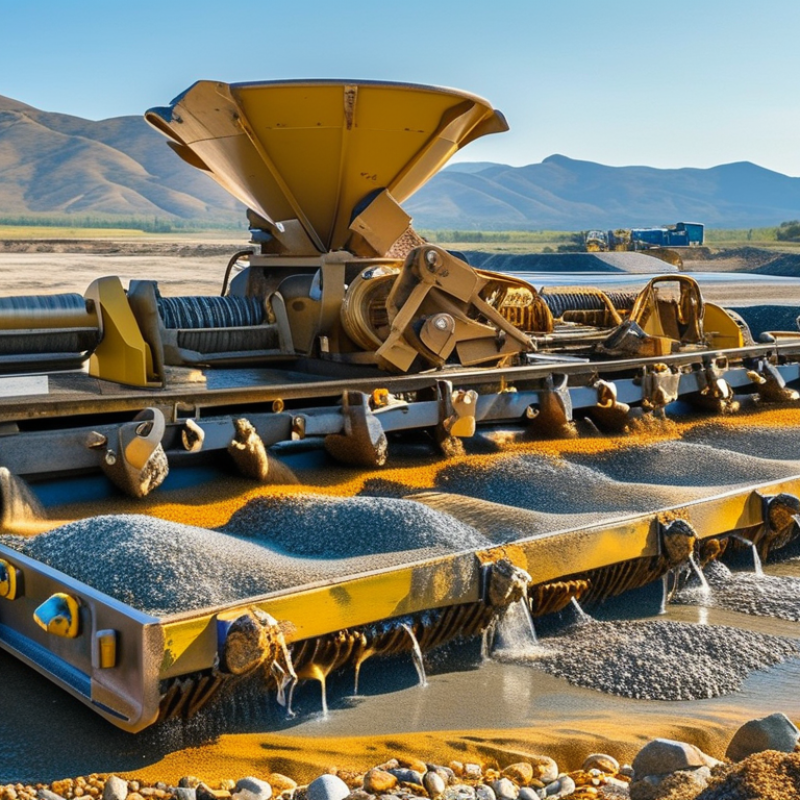
A gold wash trommel plant is a mobile or stationary processing system for recovering gold from loose, weathered material. Its main unit is a rotating cylindrical screen called a trommel. Water and controlled movement break apart clay, gravel, and compacted soil. The plant does not create gold. It separates valuable particles from unwanted size fractions.
Material enters a feed hopper and moves into the trommel drum. Inside, lifter bars raise and drop the feed through a spray zone. This action washes fines away from larger stones and roots. Screen openings allow smaller material to pass into a collection circuit. Oversize travels forward and leaves through the discharge end. Recovery equipment then treats the undersize using gravity differences. Heavier particles settle or remain on recovery surfaces, while lighter sand flows onward.
In field operation, water pressure, feed rate, and drum speed need careful adjustment. Too much feed can bury gold-bearing material inside the slurry. Too little water may leave clay lumps unbroken. Small differences matter. Operators should inspect screen panels, spray bars, and worn seals each shift. Actual recovery depends on gold size, clay content, and site geology. A trommel is efficient, but it is not automatic. Even experienced operators may revise settings after sampling the discharge. That practical feedback is easy to overlook.
| Data Dimension | Typical Data or Specification | How It Relates to Gold Recovery |
|---|---|---|
| Equipment Type | Rotating cylindrical scrubber and screening unit | The trommel combines washing, scrubbing, sizing, and initial concentration preparation in one continuous system. |
| Primary Feed Material | Alluvial or placer gravel, sand, clay-bearing soil, and weathered rock | It is mainly used for loose or partially consolidated materials that contain free gold particles. |
| Typical Feed Size | Up to approximately 150–250 mm before screening | Oversized rocks should be removed or reduced before entering the drum to prevent blockages and excessive wear. |
| Nominal Processing Capacity | Approximately 10–200 tonnes per hour, depending on plant size and feed conditions | Actual throughput depends on clay content, moisture, rock size, drum speed, screen aperture, and feeding consistency. |
| Drum Diameter | Approximately 1.0–3.0 metres | A larger drum provides greater screening area and generally supports higher material throughput. |
| Drum Length | Approximately 2.5–9.0 metres | Longer drums increase the residence time available for washing and classification, although excessive residence time can reduce efficiency. |
| Screen Aperture | Commonly 6–25 mm, selected according to the ore and recovery circuit | The screen separates fine material carrying liberated gold from larger gravel, cobbles, and waste rock. |
| Drum Rotation Speed | Typically about 6–20 revolutions per minute | Controlled rotation lifts and tumbles the feed. The correct speed promotes scrubbing without carrying valuable fines out with oversize material. |
| Washing and Scrubbing Action | Water sprays combined with lifting bars or internal plates | Agitation breaks down clay lumps and releases fine gold from gravel and soil surfaces before concentration. |
| Process Water Requirement | Approximately 20–100 m³/h for many medium-sized installations | Water demand varies with feed moisture, clay content, recycling practices, and the required washing intensity. |
| Water Pressure at Spray System | Commonly about 0.1–0.3 MPa | Spray pressure must be sufficient to wash the feed and keep the screen openings clear without creating unnecessary splashing or water loss. |
| Oversize Discharge | Coarse rocks and gravel larger than the selected screen aperture | Oversize material exits at the drum end and is normally discarded, stockpiled, or sent to a separate recovery stage if it may contain gold. |
| Undersize Discharge | Washed slurry containing sand, silt, fine gravel, and liberated gold | The undersize fraction is directed to a concentration circuit such as a sluice, jig, centrifugal concentrator, or shaking table. |
| Typical Concentration Circuit | Grizzly or hopper → trommel → sluice or gravity concentrator → final cleanup | The trommel performs preparation and classification; gravity equipment performs the main separation of dense gold from lighter minerals. |
| Gold Separation Principle | Density difference between gold and lighter gangue minerals | Free gold is much denser than common sand and gravel, allowing it to settle or be retained during gravity concentration. |
| Recovery Performance | No universal fixed percentage; results depend on liberation, particle size, feed grade, clay, and circuit design | Reported recovery should be verified through representative sampling and testing rather than assumed from trommel capacity alone. |
| Gold Particle Size Range | Fine gold through coarse free gold, depending on the downstream recovery equipment | A trommel does not by itself determine recovery for every particle size. Fine gold generally requires a properly designed secondary concentration stage. |
| Drive System | Electric motor, hydraulic motor, or diesel-powered drive | The drive rotates the drum through a chain, gear, or friction-wheel arrangement and must match the drum load and operating conditions. |
| Installed Power | Approximately 15–150 kW for common small- to medium-scale plants | Power requirements increase with drum diameter, feed load, clay content, lifting design, pumps, conveyors, and auxiliary equipment. |
| Plant Mobility | Skid-mounted, trailer-mounted, or containerized configurations are common | Mobile layouts simplify relocation between deposits and can reduce site preparation requirements. |
| Material Retention Time | Often about 1–5 minutes inside the drum | Retention time must be long enough for washing and screening but short enough to maintain the planned throughput. |
| Clay Handling | Requires stronger scrubbing, adequate water, and sometimes a separate scrubber or log washer | Sticky clay can coat gold particles, blind the screen, and reduce recovery if it is not adequately dispersed. |
| Screening Efficiency Factors | Drum speed, slope, aperture size, feed rate, water flow, and screen condition | Balanced operating conditions help prevent misplaced gold-bearing fines from reporting to the oversize discharge. |
| Common Wear Parts | Screen panels, lifter bars, spray nozzles, bearings, seals, drive components, and liners | Regular inspection helps maintain screening accuracy, washing performance, and mechanical reliability. |
| Water Recycling | Settling pond, thickener, clarifier, or closed-loop water circuit | Recycling can reduce freshwater consumption and help control suspended solids, provided the circuit is properly sized. |
| Operating Limitation | Not a complete replacement for crushing, grinding, or final gold refining | A trommel is most effective for washing and classifying suitable feed. Hard rock or locked gold normally requires additional comminution and treatment. |
Note: The specifications shown are representative industry ranges for generic gold wash trommel plants. Actual performance and operating requirements depend on ore characteristics, plant configuration, site conditions, and testing results.
: It is a rotating drum system that screens, washes, and separates gold-bearing gravel. Water does most of the sorting.
Lifters break clay and compacted soil apart inside the drum. Water sprays loosened material across screen panels.
Gold is denser than common sand and gravel. Riffles and recovery surfaces slow water, helping heavy particles settle.
Larger stones leave as oversize material. Smaller particles pass through the screen openings with the flowing slurry.
Sticky clay can coat gold particles and block screen openings. Washing may become weaker within minutes.It hides losses.
Yes. Excessive water may carry fine gold downstream with lighter sand. Fine particles need controlled flow and suitable recovery surfaces.
Faster rotation can increase capacity. However, it may reduce washing and increase oversize carryover.Slower is not always better.
They should check screen holes, spray bars, lifters, mats, and recovery areas. Uneven wear can quietly reduce performance.
Samples from feed, concentrate, and tailings can reveal missing recovery. Testing different feed conditions is more reliable than trusting one good shift.
Feed consistency, water flow, screen aperture, drum speed, inclination, and maintenance all matter. Local geology still controls the result.Real sites differ.
A Gold Wash Trommel Plant is a processing system designed to wash, screen, and concentrate gold-bearing alluvial materials such as gravel, sand, and clay. Its main components typically include a rotating trommel drum, feed hopper, water supply, spray bars, screening sections, support frame, drive system, and recovery equipment. As raw material enters the hopper, it is gradually carried through the rotating drum. Water breaks down clay and washes loose particles, while the drum’s motion and screen openings separate larger rocks from finer material.
After screening, the fine fraction moves toward the recovery section, where differences in density allow heavier gold particles to settle while lighter sediments are discharged. The efficiency of this process depends on several factors, including feed size, clay content, water pressure, drum speed, screen design, material flow rate, and the condition of the recovery system. Proper adjustment and regular maintenance help improve washing quality, reduce gold losses, and maintain stable plant performance.

 Ascend